
HVAC Repair in Orland Park, IL
Heating and Cooling Services by Windy City HVAC Repair
Most Orland Park homeowners don’t think about their furnace until a February cold front rolls in off Lake Michigan and the system starts short-cycling at midnight. By then, the temperature inside has already dropped ten degrees and the repair options narrow fast. Whether your AC is struggling to keep up on a humid July afternoon along La Grange Road or your furnace is throwing a fault code in a Crystal Tree subdivision home that was built in the early 1990s, the underlying problem is almost always something that gave a warning weeks or months earlier.
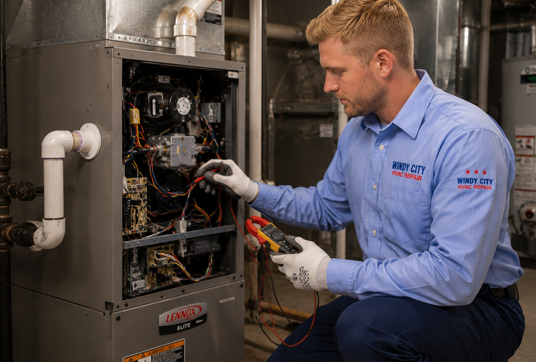
Windy City HVAC Repair provides professional HVAC repair, installation, and maintenance services for homeowners and small businesses throughout Orland Park and Cook County. We handle everything from emergency furnace repairs to full system replacements and ongoing maintenance, with a focus on getting the root cause right, not just the symptom.
We work in Orland Park homes regularly. We know the housing stock, the typical system ages, and the comfort problems that come with them.
HVAC Services in Bolingbrook, IL
Heating & Cooling by Windy City HVAC Repair
When your HVAC system isn’t working the way it should, you notice it fast. In Bolingbrook, that could mean a house that won’t cool down in July or a furnace that struggles to keep up in January.
At Windy City HVAC Repair, we focus on fixing those problems the right way. We provide heating and cooling services for homeowners and small businesses throughout Bolingbrook and Will County, including repairs, system replacements, and ongoing maintenance.
We’re familiar with the way homes in this area are built and how that affects system performance, which allows us to diagnose issues accurately and recommend solutions that actually last.
HVAC Service Built Around Orland Park Homes
Orland Park is a largely owner-occupied, single-family suburb sitting about 25 miles southwest of Chicago. The housing stock here is distinctly different from neighborhoods closer to the city, and that matters a great deal when diagnosing an HVAC problem.
The village grew in waves. Older neighborhoods near the historic downtown core along 151st Street tend to have homes built in the 1970s and 1980s, with original ductwork, standard-efficiency gas furnaces, and aging central air systems that were sized for houses before finished basements and home additions became common. Many of those homes have had work done over the years, which often means inconsistent ductwork, mismatched equipment, and comfort problems that nobody addressed during the renovation.
Newer subdivisions across Orland Park, including areas like Silo Ridge, Carillon Club, and Eagle Ridge, feature homes from the 1990s through the 2000s. These houses typically run forced-air natural gas systems with central AC, and they are now entering the age range where equipment decisions become real. A system installed in 1998 or 2004 is either approaching end of life or already past it.
There are also townhomes, condominiums, and attached units throughout the village, particularly near Orland Square and along major commercial corridors. These properties often have individual air handlers, smaller system footprints, and installation constraints that require a different approach.
None of these homes are the same. That is why we evaluate the entire system before recommending anything.
Air Conditioning Repair in Orland Park, IL
Orland Park summers are not especially forgiving. The Cook County heat index pushes well above 95 degrees on the worst days of July and August, and homes that sit on open lots without much tree cover absorb heat throughout the day. A central AC system that is marginal in May becomes a genuine problem in the middle of a heat wave.
Most homeowners notice the first signs of AC trouble before the system fails completely. The house cools down eventually, but it takes longer than it should. One part of the home stays comfortable while another never seems to match the thermostat setting. Energy bills climb even though usage hasn’t changed. The system cycles on and off more frequently than it used to.
These are not just inconveniences. They are diagnostic clues.
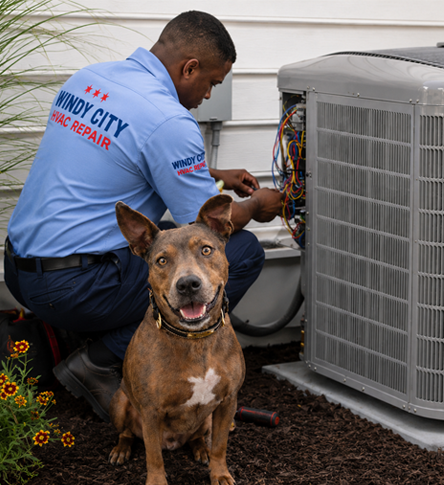
When we evaluate an air conditioning problem in an Orland Park home, we look at the full picture.
That includes refrigerant charge and coil condition, airflow through the duct system, electrical components including capacitors and contactors, thermostat calibration and wiring, and how the system is sized relative to the home’s current layout. A home that added a finished basement or a room addition since the system was last replaced may simply be running equipment that was never sized for the square footage it is trying to condition.
If your AC needs replacement, we perform proper load calculations based on the home as it exists today, not as it was designed. Matching the new unit to the old unit without that step is one of the most common installation mistakes in residential HVAC, and it leads to systems that are oversized, undersized, or poorly configured for the ductwork they are connected to.
Most AC repairs in the Orland Park area run between $150 and $550 depending on the component involved. Refrigerant work, compressor issues, and electrical component failures each carry different costs, and we explain those clearly before any work begins.
Furnace Repair and Heating Services
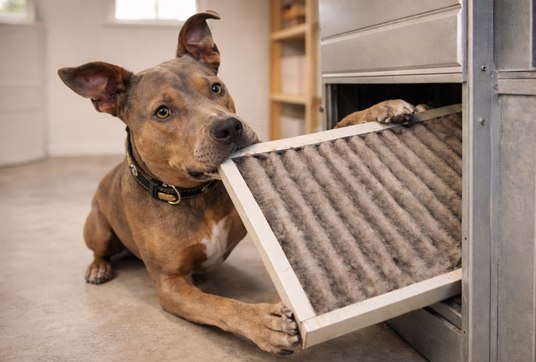
Orland Park winters are long and steady in their demands. Wind chill readings in January regularly drop below zero, and heating systems here run continuously for stretches that would stress any equipment. A gas furnace that is ten or twelve years old and has not been serviced regularly is carrying a meaningful risk of failure when the temperatures are at their worst.
The most common furnace problems we find in Orland Park homes are not dramatic. They tend to build gradually. A heat exchanger that has developed a small crack. A flame sensor covered in oxidation that causes the burners to ignite and then shut off within a few seconds. A draft inducer motor that is laboring harder than it should. A pressure switch that trips intermittently because something in the venting or drainage system is slightly off.
Left unaddressed, these issues either worsen to a complete failure or, in the case of a cracked heat exchanger, become a carbon monoxide concern. Carbon monoxide has no smell. Homes where the furnace is running but the heat exchanger has failed can accumulate CO without any obvious warning. This is the specific reason we never recommend delaying a furnace inspection when a system is cycling irregularly, producing weak heat, or throwing a fault code.
For older homes in Orland Park with systems from the mid-1990s or early 2000s, the repair-versus-replace question comes up regularly. A furnace that is 15 years old or older and requires a heat exchanger replacement or a major component repair is generally a candidate for replacement, particularly given how significantly high-efficiency equipment has improved in the last decade. A modern 96 AFUE gas furnace uses meaningfully less fuel than a standard-efficiency unit from that era, and that difference shows up in Peoples Energy bills through every heating season.
We do not push replacement when repair is the right answer. We explain both options clearly and let you decide.
HVAC Installation and System Replacement in Orland Park
Replacing an HVAC system is one of the larger decisions a homeowner makes, and in Orland Park it is a decision that comes up frequently given the age profile of the housing stock. When the original equipment from a 1990s or early 2000s build reaches the end of its service life, the replacement is not simply about picking a new unit.
Homes that have been updated, expanded, or finished since the original HVAC installation often have a load profile that is completely different from when the system was originally specified. A basement that was unfinished in 1995 and is now a full living space adds heating and cooling demand that the original system was never designed to handle. Ductwork that served four rooms when the house was built may not adequately serve six rooms today.
We size every system we install using Manual J load calculations. This is the industry-standard method for determining the correct equipment capacity based on square footage, insulation levels, window orientation, ceiling height, and internal heat loads. It is not guesswork and it is not matching the old unit’s tonnage. Systems installed without proper load calculations are frequently oversized, which leads to short cycling, poor humidity control, uneven temperatures, and equipment that wears out faster than it should.
We also evaluate ductwork condition before every installation. Duct systems in older Orland Park homes often have leakage, inadequate return air, or configurations that limit airflow in ways that a new high-efficiency system will struggle to work around. Addressing the duct system as part of the replacement, rather than after the fact, is what produces a result that actually feels better throughout the home.
Installations meet all local Cook County permit and inspection requirements.
What We Commonly Find in Orland Park Homes
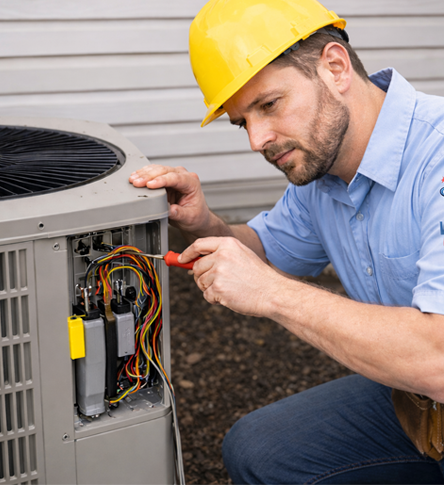
Because Orland Park has a diverse mix of housing ages and styles, HVAC issues vary considerably from one neighborhood to the next. That said, some patterns come up regularly.
In homes built between the mid-1980s and mid-1990s, we often find original ductwork that is undersized for modern equipment or that has accumulated enough leakage to significantly reduce efficiency. These homes sometimes show a 20 to 30 percent duct leakage rate, meaning a substantial portion of conditioned air never reaches the living space. Repairing or replacing duct sections is sometimes the single highest-impact change available.
In homes from the late 1990s and 2000s, equipment has typically been replaced at least once, but that replacement was not always done correctly. We frequently see systems installed without proper load calculations, incorrect refrigerant charges from a previous service, or ductwork that was never updated to match the new equipment.
In townhomes and attached units, the challenge is often space and access. Equipment is sometimes installed in confined mechanical closets or attic spaces with limited serviceability, and previous contractors have occasionally taken shortcuts that create longer-term issues.
Multi-level homes throughout Orland Park regularly show temperature imbalances between floors. The second floor stays warm in summer or cold in winter regardless of what the thermostat reads downstairs. This is almost always an airflow issue, sometimes addressable through damper adjustment or duct modification, and sometimes requiring a zoning system to genuinely resolve.
Indoor Air Quality and Year-Round Comfort
Temperature is what most homeowners focus on when something feels wrong, but indoor air quality affects comfort throughout the year in ways that are easy to overlook.
Orland Park summers bring humidity levels that can make a properly cooled home still feel sticky and uncomfortable. If your AC is running but the air feels heavy, the system may be oversized, cycling off before it has adequately dehumidified the air, or the home may benefit from a dedicated whole-home dehumidifier. Winter brings the opposite problem. Gas heating is inherently dry, and homes without humidification often drop to indoor relative humidity levels below 20 percent during extended cold stretches, which affects respiratory comfort, wood floors, and furniture.
Whole-home humidifiers, dehumidification systems, and advanced air filtration are improvements that work through the existing forced-air system and typically require minimal installation disruption. For homes in Orland Park where family members have allergies or respiratory sensitivities, upgraded filtration can make a genuine difference in daily comfort.
Emergency HVAC Repair in Orland Park
A furnace that stops working at 11pm on a January night in Orland Park is not something that can wait until morning. Wind chills below zero mean interior temperatures drop fast, particularly in older homes with less insulation. The same urgency applies when an AC system fails during a heat advisory in July, especially for households with young children, elderly residents, or anyone with a medical condition affected by extreme heat.
Windy City HVAC Repair provides 24/7 emergency HVAC service throughout Orland Park. When conditions are extreme and your system has failed, fast response matters more than anything else.
We offer solutions that improve overall comfort, not just system performance.
Why Orland Park Homeowners Trust Us
We work exclusively on heating and cooling systems. That focus shapes how we approach every service call, every diagnostic evaluation, and every installation decision.
Homeowners in Orland Park are experienced buyers. Many have owned multiple homes, dealt with contractors before, and know when they are being sold something they do not need. We operate on the assumption that you want a clear explanation of what is happening with your system and an honest recommendation, not a sales pitch. If a repair is the right answer, we say so. If replacement makes more sense over a five-year horizon, we explain why.
Our technicians are NATE-certified, background-checked, and licensed. We use FieldCoach technology to document every service call with photos and records that stay with your system history. Upfront pricing means you know the cost before we start. There are no surprise fees at the end of a job.
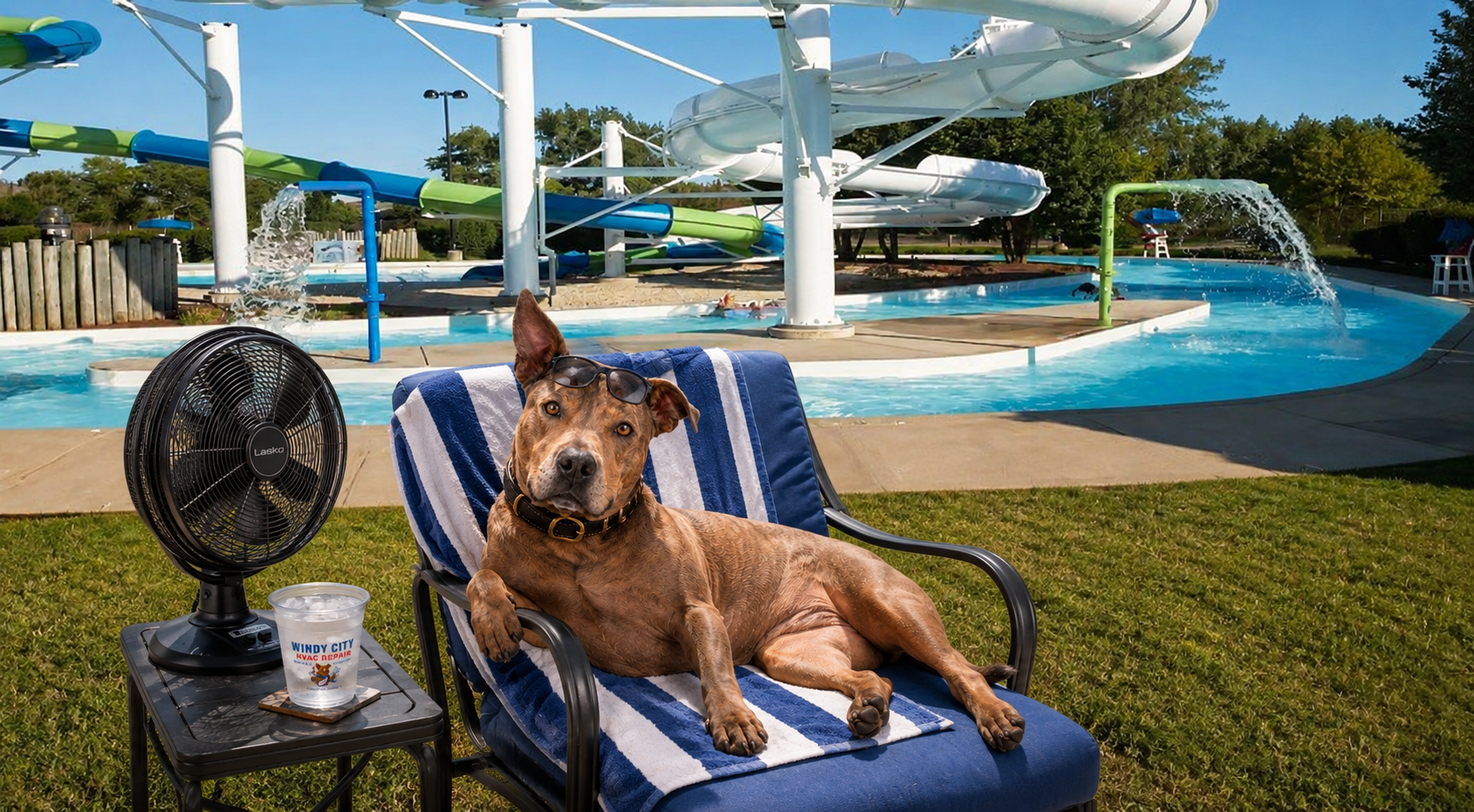
Eddy, our Chief Barketing Officer, approves of every job we do. He is a pitbull with strong opinions about quality HVAC work.
Frequently Asked Questions About HVAC Repair in Orland Park, IL
Most furnace repairs in Orland Park run between $150 and $600 depending on the component involved. Igniter replacements, flame sensor cleaning, and pressure switch issues are typically on the lower end. Heat exchanger failures, inducer motor replacements, and control board issues cost more. We provide a clear diagnosis and cost explanation before any repair begins, so you understand exactly what you’re paying for and why.
It depends on what failed and the overall condition of the system. Minor repairs on a 15-year-old furnace that has been maintained and is otherwise running well can make sense. If the heat exchanger has cracked, a major electrical component has failed, or the system has a history of recurring issues, replacement typically makes more economic sense. A newer high-efficiency furnace will also lower your Peoples Energy bills, which helps offset the replacement cost over time.
The most common cause is an airflow imbalance in the duct system. Upper floors in two-story Orland Park homes often receive inadequate supply air relative to the cooling or heating load, which is a duct design issue rather than an equipment issue. Damper adjustment, duct modification, or a zoning system with separate thermostats per floor are the usual solutions. The right fix depends on the home’s specific layout and duct configuration, which requires an in-person evaluation.
Yes. Furnace replacements, air conditioner installations, and full system replacements in Orland Park require permits and inspections through the Village of Orland Park’s building department. Work done without permits can create problems when selling the home and may affect homeowner’s insurance coverage. We handle permitting as part of every installation we complete.
Illinois four-season climate means your system works harder than in most parts of the country. Furnace maintenance is best scheduled in September or early October before heating demand peaks. AC maintenance is best done in April or early May. Annual service catches developing issues before they become failures and keeps manufacturer warranties valid on newer equipment.
We offer same-day scheduling for urgent HVAC issues and 24/7 emergency service for heating and cooling failures that cannot wait. Routine maintenance appointments run Monday through Friday, 8am to 4pm. Emergency calls are handled around the clock.
Orland Park homeowners may qualify for federal Inflation Reduction Act tax credits on qualifying high-efficiency heat pumps and furnaces, up to $2,000 in some cases. Peoples Energy and ComEd have also offered rebate programs for high-efficiency equipment installation. Availability and amounts change periodically, so it is worth checking current program details when you are planning a replacement. We can walk through what may apply to your specific equipment choice.
Schedule HVAC Service in Orland Park, IL
If your heating or cooling system is not performing the way it should, the gap between a small problem and a large one closes faster than most homeowners expect. A furnace that is short-cycling in October is manageable. The same furnace failing in January is an emergency.
Windy City HVAC Repair provides HVAC repair, installation, and maintenance throughout Orland Park and nearby communities including Tinley Park, Frankfort, and Mokena. If you have questions about your system or need to schedule service, call (815) 306-8886 or reach out online.
Call today or schedule service online to get your system back on track.