
How Much Does Furnace Repair Cost in Bolingbrook & Nearby Suburbs? 2026 Guide
When your furnace stops working during an Illinois winter, one of the first questions is usually, “How much is this going to cost to fix?”
There is no single answer because furnace repair costs depend heavily on what went wrong. A relatively simple sensor or ignition problem can cost considerably less than a failed blower motor, control board, gas valve, or other major component. The age and condition of the furnace, the parts required, accessibility of the equipment, and whether emergency service is needed can also affect the final cost.
For homeowners and businesses in Bolingbrook and the surrounding suburbs, knowing what affects furnace repair costs can help you understand an estimate, recognize when a problem needs immediate attention, and make a more informed decision about repairing or replacing your heating system.
How Much Does Furnace Repair Cost Near Bolingbrook, IL?
As a regional benchmark, 2026 Chicago-area data from Angi reports an average furnace repair cost of approximately $291, with many repairs falling between $124 and $476. Major component failures can cost substantially more.
These numbers are helpful for understanding the general range of furnace repair costs, but they should not be treated as a quote for a particular furnace. Two systems showing the same symptoms may have completely different problems.
A furnace that starts and then shuts down, for example, could have a relatively straightforward flame-sensing problem, restricted airflow, an ignition issue, a problem with a safety control, or something more significant. Until the cause is identified, it is difficult to accurately predict the cost of the repair.
As a general guide, homeowners can expect costs to increase with the complexity of the problem:
| Type of Furnace Repair | General Cost Expectation |
| Minor repair | Often a few hundred dollars or less |
| Common component repair | Often a few hundred dollars |
| More involved component repair | Several hundred dollars and potentially more |
| Major component failure | Can reach $1,000+ and may warrant comparing repair with replacement |
| Emergency or after-hours repair | May cost more depending on the contractor and timing |
These are general market expectations, not Windy City HVAC Repair pricing. The actual cost of a furnace repair depends on the diagnosis, equipment, required parts, labor, warranty coverage, and other factors.
For that reason, the most useful question is not simply “How much does furnace repair cost?” It is “What is wrong with my furnace, and what will it take to fix it correctly?”
What Determines the Cost of a Furnace Repair?
The failed component is usually one of the biggest factors in the final repair price. Furnaces contain numerous electrical, mechanical, and safety components, including flame sensors, ignitors, pressure switches, inducer motors, blower motors, control boards, gas valves, thermostats, and limit switches. Some problems are relatively straightforward to correct, while others require more expensive parts or additional labor.
The furnace itself matters as well. Parts for certain makes, models, and older systems may cost more or be harder to obtain. The location of the equipment can affect labor, particularly when a technician has limited space to access the furnace.
Warranty coverage can also change what a homeowner ultimately pays. If a failed component is still covered by a manufacturer’s parts warranty, the out-of-pocket cost may be different from the same repair on an older, out-of-warranty furnace.
Finally, timing can affect the price. HVAC companies have different policies regarding emergency and after-hours service, so it is reasonable to ask about service-call, diagnostic, or after-hours charges before scheduling an emergency visit.
Once the system has been diagnosed, a good estimate should clearly explain what failed, what needs to be repaired or replaced, what the total cost will be, and what warranty applies to the work.
Common Signs Your Furnace Needs Repair
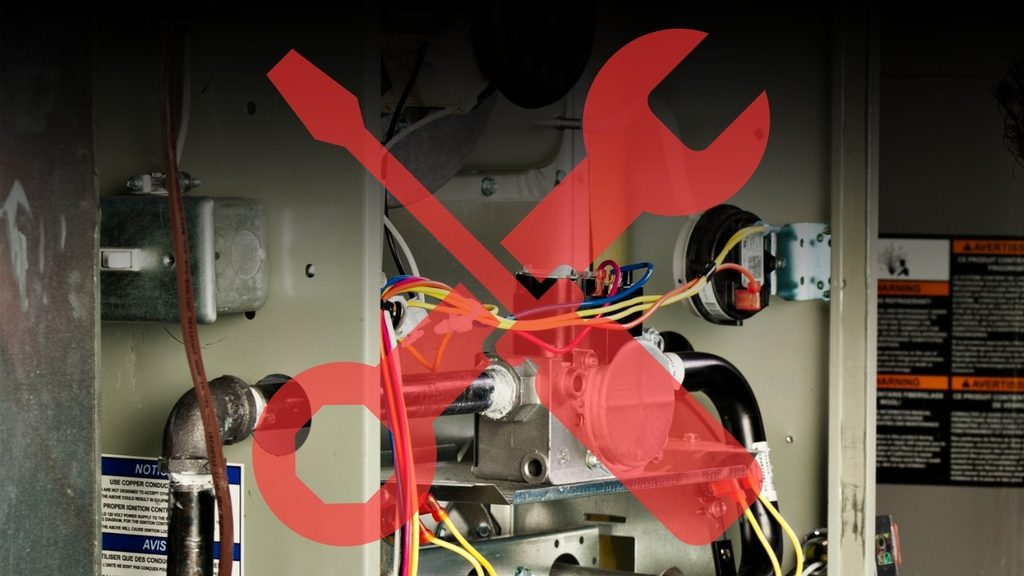
Furnace problems do not always begin with a complete loss of heat. Sometimes the first indication is a change in how the system sounds, runs, or heats the property.
Common warning signs include a furnace that will not start, starts but will not stay on, blows cold air, cycles on and off frequently, produces weak airflow, heats rooms unevenly, makes new or unusual noises, or suddenly runs much longer than normal.
The symptoms can provide useful clues, but they do not necessarily identify the problem.
| What You’re Experiencing | Possible Causes |
| Furnace won’t turn on | Thermostat, power, ignition, control, or safety issue |
| Furnace starts but won’t stay on | Flame sensor, pressure switch, ignition, airflow, or safety issue |
| Furnace runs but blows cold air | Thermostat setting, ignition problem, overheating, or another system issue |
| Furnace frequently turns on and off | Airflow restriction, thermostat issue, overheating, improper sizing, or mechanical problem |
| Weak airflow from vents | Dirty filter, blower problem, ductwork issue, or airflow restriction |
| Some rooms remain cold | Ductwork, balancing, insulation, airflow, or equipment issue |
| Furnace makes unusual noises | Blower, inducer, ignition, or another mechanical problem |
| Heating costs suddenly increase | Reduced efficiency, equipment problem, airflow issue, or increased runtime |
A qualified HVAC technician should determine why the furnace is producing the symptom before recommending a repair. Replacing a part without identifying the underlying problem can leave the original issue unresolved.
Furnace Running but Not Heating
If the furnace appears to be operating but the house is not getting warm, start with the basics. Make sure the thermostat is set to Heat and the desired temperature is above the current room temperature. Check that the furnace has power and that a circuit breaker has not tripped. A severely dirty filter can also restrict airflow and interfere with normal operation.
If those checks do not resolve the problem, the furnace could have an issue involving ignition, flame sensing, airflow, the blower, controls, fuel supply, or another component.
Furnace Blowing Cold Air
If air is coming through the vents but does not feel warm, check the thermostat fan setting. When the fan is set to ON rather than AUTO, the blower may continue circulating air even when the furnace is not actively heating.
If the thermostat is set correctly and the furnace still produces cold air, professional diagnosis may be necessary to identify an ignition, flame-sensing, overheating, fuel-supply, or other system problem.
Furnace Turning On and Off Repeatedly
A furnace that repeatedly starts and stops before completing a normal heating cycle may be short cycling. Restricted airflow from a dirty filter can contribute to this problem, but frequent cycling can also be related to thermostat problems, overheating, safety controls, mechanical issues, or improperly sized equipment.
Persistent short cycling is worth investigating. In addition to affecting comfort, frequent starts and stops can place unnecessary wear on the heating system.
What Should You Check Before Calling for Furnace Repair?
There are several basic things homeowners can safely check before scheduling service. Confirm that the thermostat is set correctly, make sure the furnace has electrical power, check the circuit breaker, inspect the air filter, and make sure supply and return vents are not blocked.
If the furnace still does not operate normally after those basic checks, it is usually time for professional diagnosis rather than continued trial and error.
There is also an important distinction between basic homeowner troubleshooting and attempting an internal furnace repair. Gas, combustion, electrical, and internal mechanical repairs should generally be handled by a qualified HVAC technician.
If you smell gas, a carbon monoxide alarm activates, you see smoke, notice a burning odor, or suspect another combustion-related safety problem, do not continue trying to restart or troubleshoot the furnace. Leave the affected area when appropriate and contact the proper emergency or utility service.
When Does a Furnace Problem Become an Emergency?
Not every furnace problem requires an emergency service call. If the system is still producing heat and the property is safe, a regular service appointment may be appropriate.
A complete loss of heat during very cold weather is different. As indoor temperatures continue to fall, a heating failure can become more than a comfort issue. It can create concerns for occupants and eventually increase the risk of frozen plumbing.
Gas odors, carbon monoxide alarms, smoke, burning odors, or suspected combustion problems should be treated more urgently than an ordinary no-heat call.
Emergency and after-hours pricing varies by HVAC contractor, so homeowners should ask about any applicable diagnostic, dispatch, or after-hours charges before service whenever circumstances allow.
Should You Repair or Replace Your Furnace?
A broken furnace does not automatically need to be replaced. In many situations, repairing the existing system is the most practical and economical choice.
The decision becomes more complicated when an older furnace needs a significant repair or has begun breaking down repeatedly. Instead of looking only at the cost of today’s repair, consider the furnace’s age, overall condition, previous repair history, efficiency, comfort performance, reliability, and availability of replacement parts.
ENERGY STAR identifies furnaces and boilers more than 15 years old, frequent equipment problems, increasing energy bills, and comfort issues as reasons homeowners may want to consider replacement. That does not mean every 15-year-old furnace needs to be replaced. Age is one factor in a larger decision.
An older furnace that has been well maintained and needs a relatively straightforward repair may still have useful service life remaining. An older furnace that needs a major component, has required several recent repairs, and struggles to heat the property consistently deserves a different conversation.
If both repair and replacement are realistic options, ask your HVAC contractor to explain both. A homeowner should be able to understand what it will take to repair the existing furnace and what replacement would involve before making that decision.
If replacement does become the better option, choosing the right furnace involves much more than simply replacing the old equipment with something of the same size. The property’s heating needs, equipment sizing, efficiency, existing ductwork, and how the building is used should all be considered. To learn more, see our guide to replacing your furnace.
Can Regular Furnace Maintenance Reduce the Risk of Repairs?
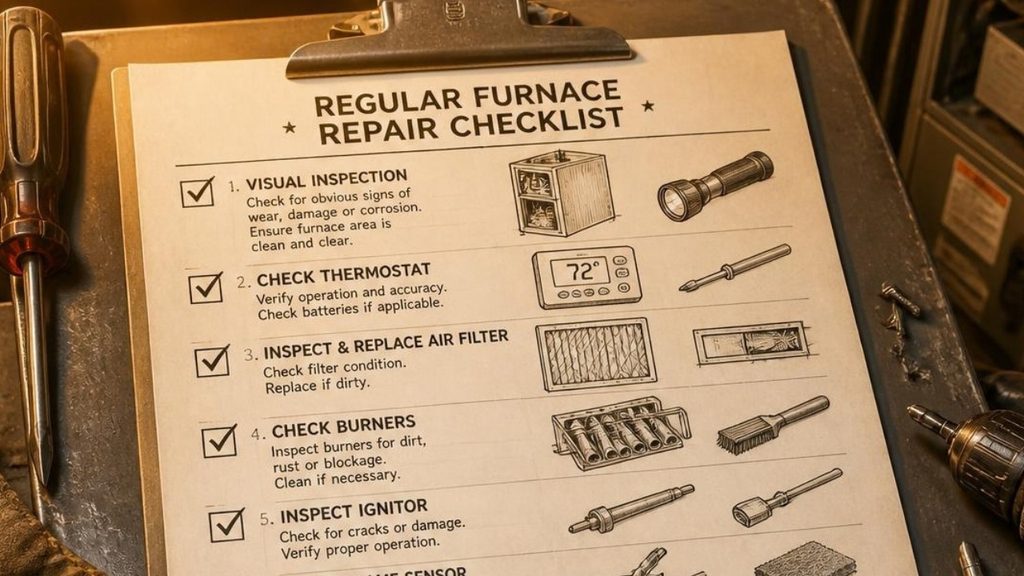
Regular maintenance cannot guarantee that a furnace will never break down, but it can help identify developing problems before they turn into an unexpected no-heat call.
ENERGY STAR recommends annual pre-season HVAC checkups and suggests having heating equipment checked in the fall before the busiest portion of heating season. A professional heating-system inspection can include evaluating system controls, electrical connections, blower components, gas connections, burner combustion, and other important parts of the equipment.
Homeowners can help between maintenance visits by replacing filters as needed and paying attention to changes in how the furnace operates. New noises, unusual odors, inconsistent temperatures, noticeably longer run times, or frequent cycling are all good reasons to have the system checked rather than waiting for it to stop working completely.
Furnace Repair in Bolingbrook and Nearby Suburbs
Windy City HVAC Repair is based in Bolingbrook, Illinois, and provides heating and cooling service throughout Bolingbrook and surrounding communities, including Naperville, Romeoville, Plainfield, Woodridge, Lemont, Downers Grove, and other areas throughout Cook, DuPage, and Will counties.
Although the same types of furnace problems occur throughout the area, every property is different. Equipment age, furnace location, ductwork, insulation, previous renovations, and how the building is used can all influence both the diagnosis and the appropriate solution.
That is why furnace repair should begin with the actual equipment and property in front of the technician, rather than an assumption based on an online price.
Need Furnace Repair Near Bolingbrook?
If your furnace has stopped heating, is blowing cold air, keeps shutting off, or simply does not seem to be operating the way it should, you should not have to guess what is wrong or whether you need a repair or an entirely new system.
Start with a proper diagnosis.
Windy City HVAC Repair is based right here in Bolingbrook and serves homeowners and businesses throughout Bolingbrook and the surrounding suburbs. Our technicians can evaluate the heating system, explain what they find in straightforward terms, and walk you through the available options so you can make an informed decision about your property.
Whether you need a routine furnace repair or your heat goes out, Windy City HVAC Repair offers HVAC repair throughout our service area.
Call Windy City HVAC Repair at 312-500-4822 or schedule your furnace service online today.
Frequently Asked Questions About Furnace Repair Near Bolingbrook, IL
How much does furnace repair cost near Bolingbrook?
Furnace repair costs depend on what has failed, the equipment, required parts, labor, and whether emergency service is needed. As a regional benchmark, 2026 Chicago-area data reports an average furnace repair cost of approximately $291, with many repairs falling between $124 and $476. Major repairs can cost substantially more. A professional diagnosis is necessary to determine the cost of repairing a specific furnace.
What is the most expensive part of a furnace to repair?
Major components such as a heat exchanger, blower motor, inducer motor, control board, or gas valve can be more expensive to repair or replace than simpler components such as sensors or ignitors. If a major component fails on an older furnace, it may be worth comparing the cost and expected benefit of repair with replacement.
Why is my furnace running but not heating my house?
Restricted airflow, thermostat problems, ignition or flame-sensing issues, blower problems, overheating, ductwork issues, or another system malfunction can prevent a furnace from heating properly. Check the thermostat and filter first. If the problem continues, the system should be professionally diagnosed.
Why is my furnace blowing cold air?
Check whether the thermostat fan is set to AUTO rather than ON. If the thermostat is set correctly, cold air can be related to ignition, flame sensing, overheating, fuel supply, or another furnace problem.
Why does my furnace keep turning on and off?
Repeated starting and stopping may be short cycling. Possible causes include a dirty filter, restricted airflow, thermostat problems, overheating, safety controls, improper equipment sizing, or another mechanical issue. Persistent short cycling should be diagnosed rather than ignored.
Can a dirty furnace filter cause the heat to stop working?
Yes. A severely clogged filter can restrict airflow and contribute to overheating, which may cause the furnace’s safety controls to shut the system down. Checking the filter is one of the simplest troubleshooting steps a homeowner can take.
What should I check before calling for furnace repair?
Make sure the thermostat is set to Heat, the desired temperature is above the current room temperature, the furnace has power, the breaker has not tripped, and the filter is not excessively dirty. You can also check that supply and return vents are not blocked. Internal gas, combustion, and electrical repairs should be left to a qualified HVAC technician.
Is a furnace not working considered an HVAC emergency?
It can be, particularly during extremely cold weather. A prolonged loss of heat can create safety concerns and increase the risk of frozen pipes. Gas odors, carbon monoxide alarms, smoke, burning odors, and suspected combustion problems require more immediate attention.
Does emergency furnace repair cost more?
It may. Emergency and after-hours pricing policies vary by HVAC company. Ask about diagnostic, dispatch, and after-hours charges before scheduling service when circumstances allow.
Is it worth repairing a 15-year-old furnace?
It can be. Age alone does not determine whether a furnace should be replaced. Consider the repair needed, repair cost, overall condition, previous problems, efficiency, reliability, and parts availability. If repair and replacement are both reasonable, compare both options before making a decision. Our repair-vs-replace checklist can help.
How often should a furnace be serviced in Illinois?
Annual furnace maintenance is a good general guideline. ENERGY STAR recommends annual pre-season HVAC checkups and suggests having heating equipment checked in the fall. Regular maintenance cannot prevent every breakdown, but it can help identify developing problems and support proper system operation.
How long does furnace repair usually take?
It depends on the problem and whether the necessary parts are available. Many common furnace repairs can be completed during the initial service visit, while more complex problems or special-order components may require additional time.
Who provides furnace repair in Bolingbrook and nearby suburbs?
Windy City HVAC Repair is based in Bolingbrook, Illinois, and provides furnace repair and heating service throughout Bolingbrook and surrounding communities, including Naperville, Romeoville, Plainfield, Woodridge, Lemont, Downers Grove, and other areas in Cook, DuPage, and Will counties.