
Ali Hassan Residence: Heating Repair in Bronzeville, Chicago: A Rheem Furnace Installation
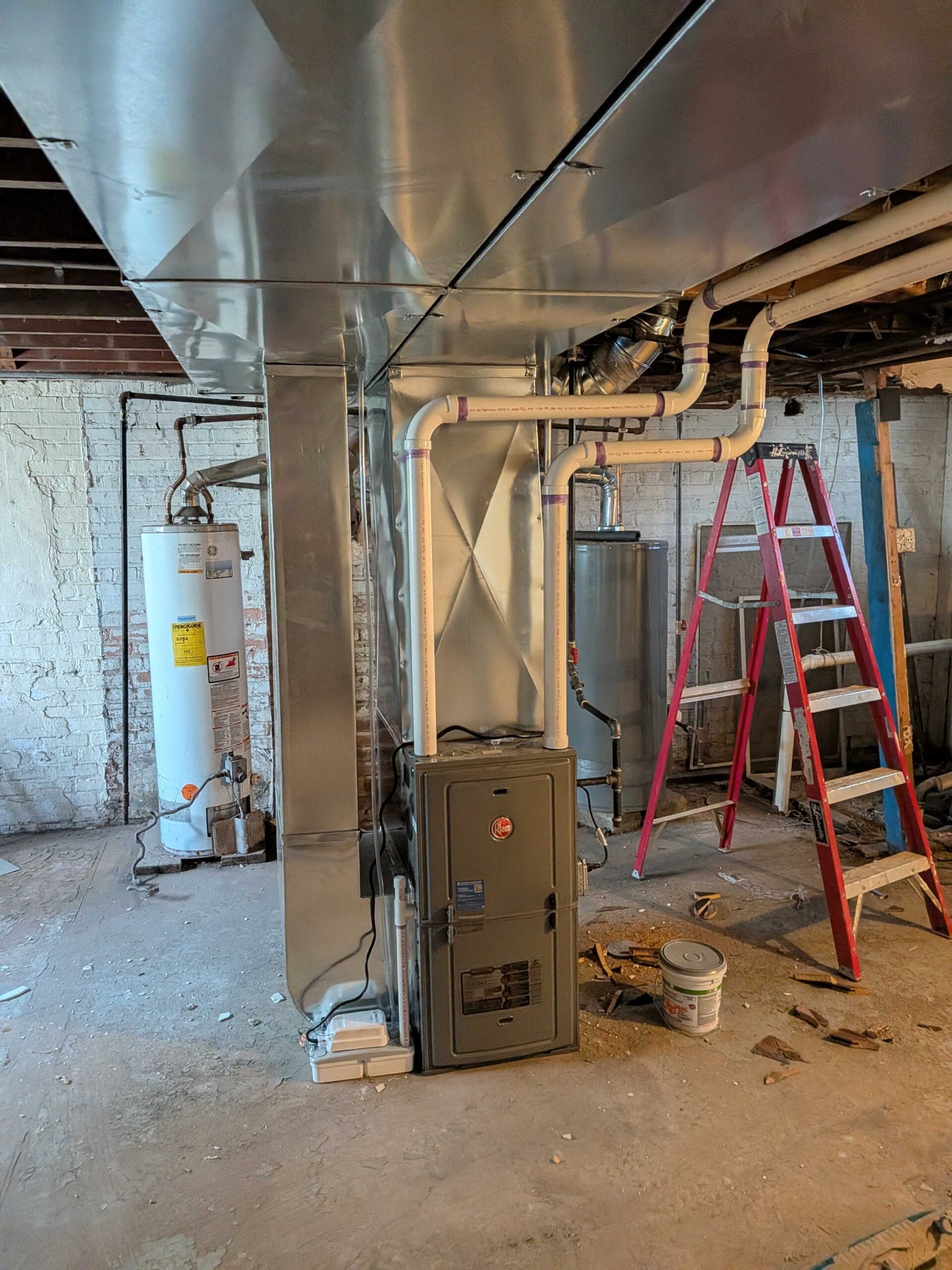
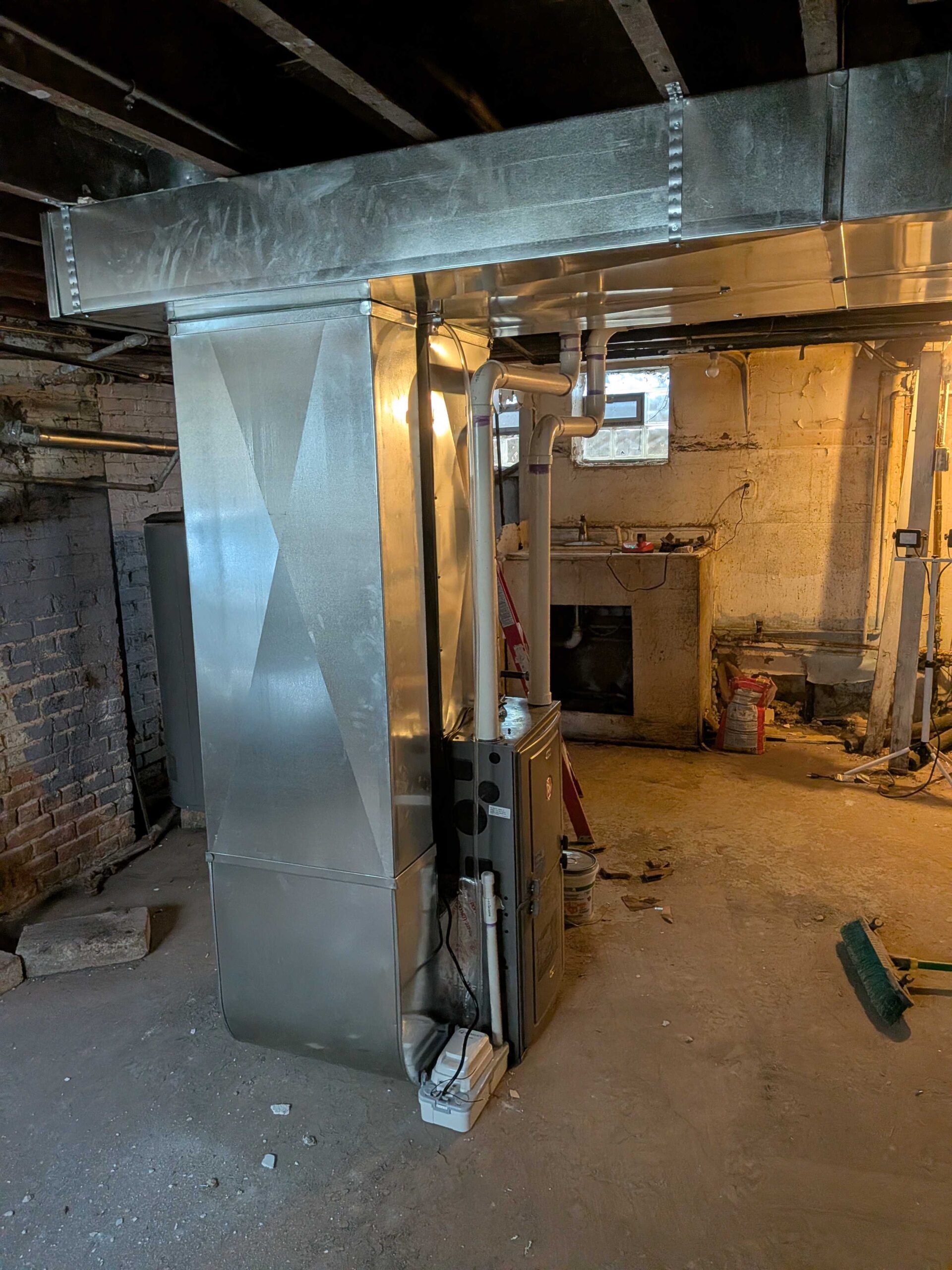
A heating project can involve more than work inside the furnace cabinet. For this completed job in Bronzeville, Chicago, Windy City HVAC Repair installed a new Rheem 96% AFUE two-stage variable-speed furnace, along with ductwork transitions and a programmable thermostat. The work also included eight supply lines connected with the existing main-floor return arrangement.
The installation brought the heating equipment, air distribution connections, and temperature controls into one defined scope. Rather than describing a single component repair, this project records a furnace installation with supporting ductwork and control updates. Completed on November 11, 2026, the job provides a practical example of how equipment selection and existing duct connections fit together during heating work. Below, we explain what was installed, what the equipment terminology means, and which details matter for ongoing operation.
A Bronzeville Heating Project With a Defined Installation Scope
Bronzeville is on Chicago’s South Side, and this project adds a local example to our heating work across the city. For customers considering service in Chicago, the useful comparison is the scope of the job: a new furnace, connections to existing air distribution components, and a new thermostat.
The recorded work identifies the equipment and connection details, rather than a specific failure diagnosis. That distinction matters because a completed installation should not be presented as proof that a particular repair was impossible or that the previous equipment had failed. Here, the confirmed scope is the installation of the Rheem furnace and its associated ductwork and controls.
Our heating repair services page provides a broader starting point for customers with heating concerns. This project is a more specific record of installation work, illustrating why the furnace itself is only one part of the system that needs attention.
Understanding the Rheem 96% AFUE Furnace
The new furnace is a Rheem model rated at 96% AFUE. AFUE stands for Annual Fuel Utilization Efficiency, a standardized measure of how efficiently a furnace converts fuel into heat over a typical heating season. A 96% rating describes the equipment’s rated efficiency, not a measured reduction in this customer’s utility bills.
That distinction keeps expectations grounded. Actual energy use depends on more than the furnace rating, including thermostat settings, weather, the property’s heating needs, and the condition of the air distribution system. No before-and-after energy measurements were provided for this job, so the completed result is best described by the installed equipment rather than a savings estimate.
The furnace also has two-stage heating. In general, two-stage equipment can operate at a lower heating stage or move to a higher stage as demand requires. This differs from a single-stage furnace’s basic on-or-off heating operation, although the way staging is controlled depends on the equipment and control configuration.
Variable-Speed Airflow and Ductwork Transitions
The variable-speed designation refers to the furnace’s blower operation. A variable-speed blower can adjust its operation rather than running at only one fixed speed. The heating stages and blower are related parts of the system, but they describe different functions: producing heat and moving air.
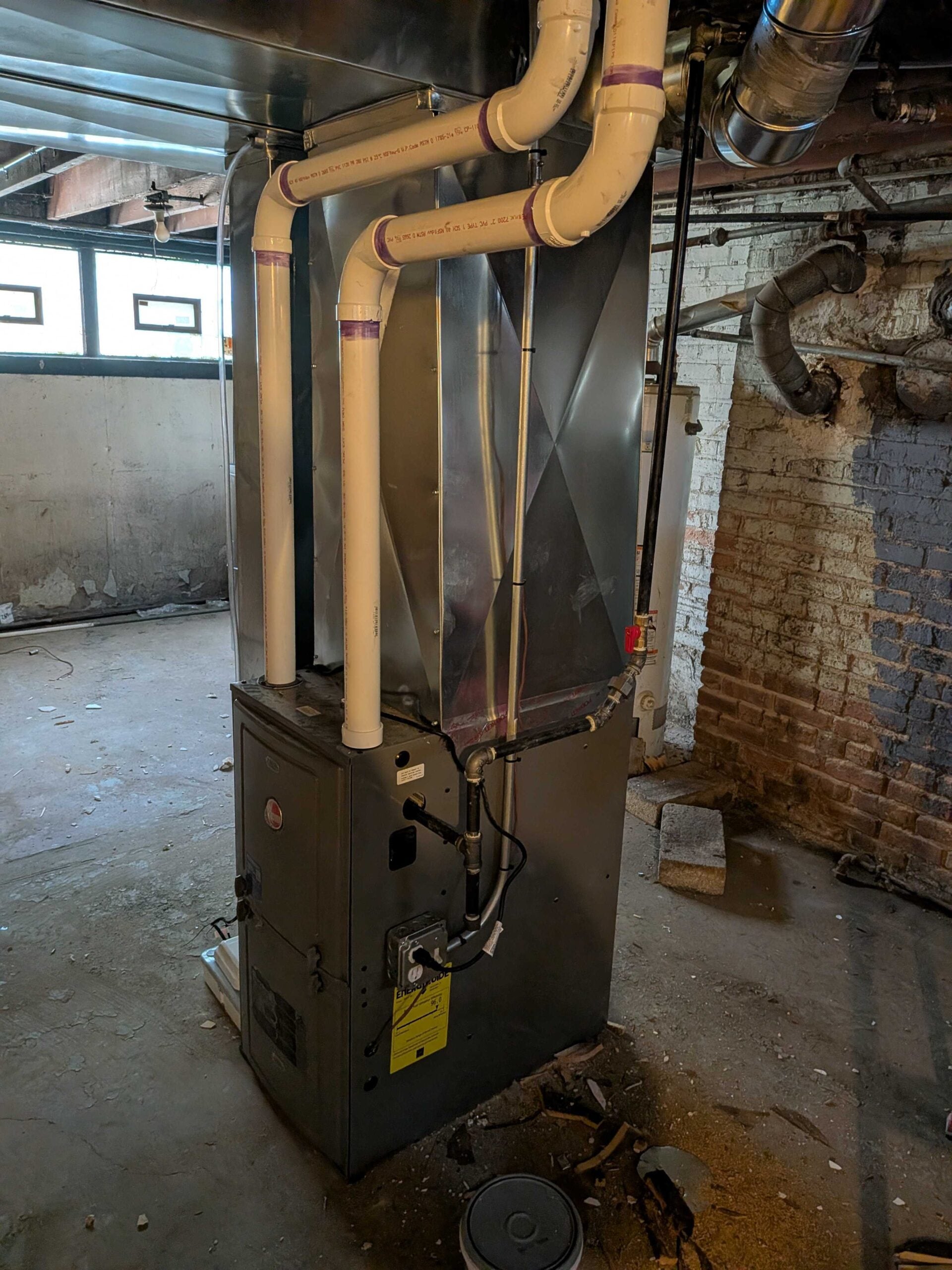
Airflow still depends on the ductwork connected to the equipment. For this job, our crew installed ductwork transitions as part of the furnace installation. Transitions connect duct sections or equipment openings where the shape or dimensions differ, making them an important part of fitting new equipment into an existing distribution arrangement.
The project notes do not specify transition dimensions or fabrication materials, so those details are not attributed to this installation. What is confirmed is that the transitions were included in the work, rather than treating the furnace cabinet as a stand-alone installation disconnected from the surrounding ducts.
Eight Supply Lines and the Existing Main-Floor Return
The job also included eight supply lines connected with the existing main-floor return arrangement. Supply and return ducts have different roles: supply ducts distribute conditioned air, while return ducts bring air back toward the equipment. Both belong to the same circulation system, but they should not be confused with one another.
The project record identifies the eight supply lines and the existing main-floor return without providing a detailed duct layout. It does not establish the number of rooms served, the dimensions of each line, or whether additional return pathways were present. Those details would be needed before drawing conclusions about room-by-room distribution.
For a property owner comparing similar work, the practical takeaway is to consider equipment and duct connections together. A furnace’s efficiency rating does not describe the entire duct system, and the number of supply lines alone does not establish airflow performance. This job’s documented scope includes both the new equipment and the connections serving it.
A New Programmable Thermostat for Heating Control
A new programmable thermostat completed the control portion of this installation. Programmable controls allow temperature settings to follow a schedule instead of requiring every change to be made manually. The useful schedule depends on how the property is occupied and the temperatures the customer prefers.
No thermostat brand, model, or programmed schedule was specified for this project. For that reason, features such as Wi-Fi access, remote monitoring, or automatic learning are not part of the documented result. The confirmed update is a new programmable thermostat installed with the furnace.
After an installation, it is helpful to understand the thermostat’s operating mode and schedule before making repeated adjustments. A scheduled temperature change can otherwise look like an unexpected setting change. Keeping the thermostat instructions available makes it easier to distinguish programmed operation from a concern that needs service.
The Finished Installation and Ongoing Care
The completed scope brought together the Rheem 96% AFUE two-stage variable-speed furnace, ductwork transitions, eight supply lines, the existing main-floor return arrangement, and a programmable thermostat. These are the verified outcomes of the job. No measured airflow, sound, temperature, or utility-cost results were supplied.
For ongoing care, property owners should follow the equipment manufacturer’s filter and maintenance instructions and keep supply and return openings unobstructed. Filter type and replacement frequency vary by equipment and site conditions, so a generic replacement interval is not a substitute for the applicable instructions. Customers can ask about maintenance plans and discuss the installed system’s needs.
We also provide cooling repair services. For a different example of equipment work in the city, see our Chicago cooling project involving a condenser replacement. That project concerns cooling equipment, while this Bronzeville job centers on furnace installation and heating distribution connections.
If you are planning heating work, describe the existing equipment, the concern or desired change, and any known ductwork limitations when contacting our team. You can also find Windy City HVAC Repair on Google for business information. This Bronzeville installation offers a concrete reference for discussing a furnace project that includes both air distribution connections and updated temperature controls.