
Why Is One Room Colder Than the Rest of Your House? Common Heating Problems in Chicagoland Homes
When winter settles into the Chicago suburbs, maintaining a comfortable temperature throughout your home can become a challenge. Your living room may feel perfectly warm while an upstairs bedroom stays chilly, or you may notice that one room never seems to reach the temperature shown on the thermostat.
If one room is colder than the rest of your house, the problem does not necessarily mean your furnace is failing. Uneven heating can develop from restricted airflow, ductwork problems, insufficient insulation, air leaks, or differences in how heat moves through the home.
These issues are particularly noticeable during Illinois winters, when colder outdoor temperatures increase the amount of heat a house must replace to remain comfortable.
At Windy City HVAC Repair, we help homeowners throughout Plainfield, Naperville, Frankfort, and the surrounding Chicago area understand heating and airflow problems. Knowing what causes uneven temperatures can help you determine whether the solution involves basic maintenance, improvements to your home, or professional HVAC service.
Why Does One Room Stay Colder Than the Others?
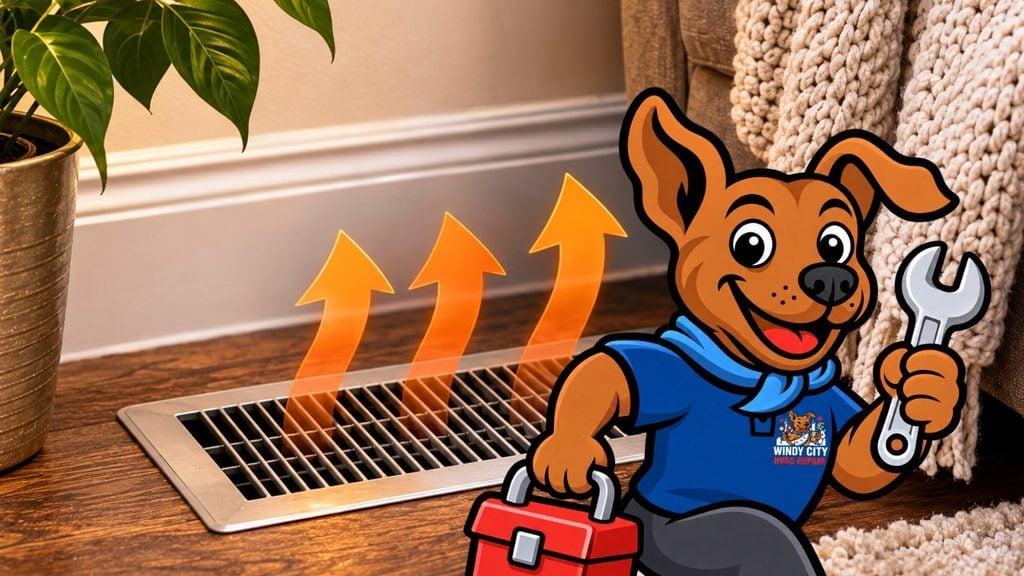
Your heating system is designed to distribute warm air throughout the house, but every room has different heating requirements. Room size, window area, insulation, duct layout, and exposure to outdoor temperatures all influence how quickly a space gains or loses heat.
A room with large windows or multiple exterior walls may lose heat faster than an interior room. A bedroom located far from the furnace may receive less airflow if the duct system is poorly balanced. An addition built years after the original house may have different insulation or heating requirements.
The key is identifying whether the cold room is receiving insufficient warm air, losing heat too quickly, or experiencing a combination of both.
1. Blocked Supply Vents or Return-Air Grilles
One of the simplest causes of uneven heating is restricted airflow.
Supply registers deliver heated air into rooms, while return-air pathways allow air to move back toward the HVAC system. When either side of this circulation process is obstructed, room comfort can suffer.
Furniture placed over a floor register, heavy curtains covering a wall vent, or a blocked return grille can interfere with airflow. In some homes, closing bedroom doors may also affect air movement if the room lacks an adequate return-air pathway.
Homeowners can begin by checking that supply registers and return-air grilles are unobstructed. It is also worth confirming that adjustable registers have not been accidentally closed.
However, closing multiple vents elsewhere in the house to force additional heat into a cold room is not always a safe or effective solution. Restricting airflow can increase duct pressure and interfere with equipment operation.
If basic adjustments do not improve comfort, the duct system may need professional evaluation.
2. Leaky or Poorly Designed Ductwork
Your furnace may be producing enough heat, but that heat still needs to reach every room.
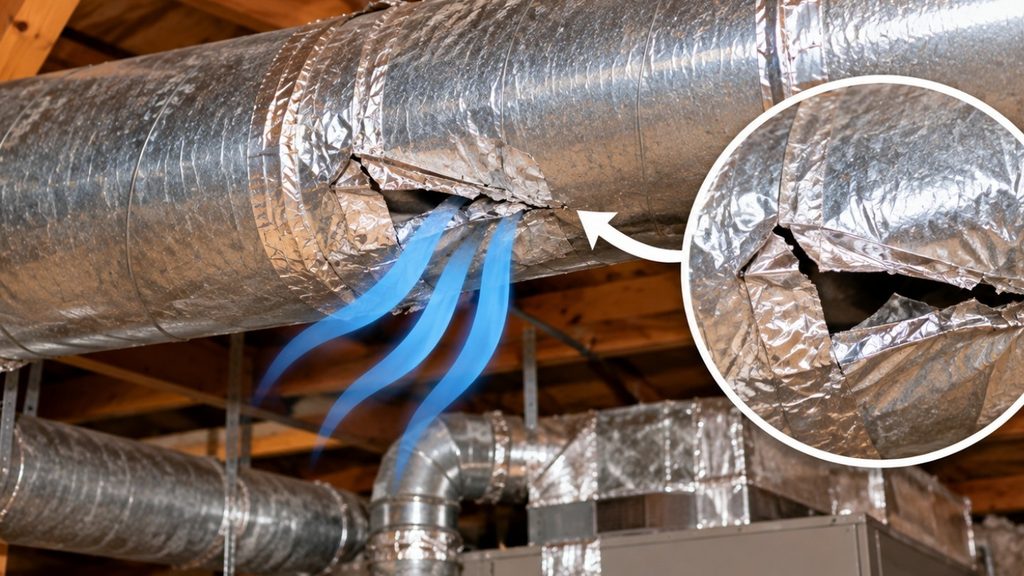
Ductwork can develop leaks at joints, connections, and seams, allowing conditioned air to escape before reaching its intended destination. Ducts may also be improperly sized, damaged, disconnected, or arranged in ways that make balanced airflow difficult.
This can be particularly noticeable in rooms served by long duct runs or ductwork passing through unconditioned spaces.
For example, a bedroom at the far end of a house may receive noticeably weaker airflow than rooms closer to the furnace. The problem may become more obvious during periods of sustained cold weather, when the room loses heat faster than the duct system can replace it.
A qualified HVAC technician can evaluate airflow, duct static pressure, and distribution problems to determine whether the system is delivering sufficient heated air.
3. Poor Insulation and Air Leaks
Sometimes the furnace and ductwork are functioning properly, but the room is losing heat faster than expected.
Insulation helps slow heat transfer through walls, ceilings, and floors. Air sealing helps prevent unwanted outdoor air from entering the home through gaps around windows, doors, attic penetrations, and other openings.
When insulation is insufficient or air leaks are present, a room may feel colder even when warm air is reaching it.
Common warning signs include noticeable drafts, cold exterior walls, uncomfortable areas near windows, and rooms that cool quickly after the heating system shuts off.
These problems may be especially noticeable in older homes, additions, and spaces located above garages.
An energy assessment or home-performance evaluation can help identify insulation and air-sealing deficiencies. If the main cause is heat loss through the building envelope, HVAC repairs alone may not resolve the comfort problem.
4. Rooms Above Garages Can Be Difficult to Heat
Bedrooms and living spaces located above garages are common sources of winter comfort complaints.
Unlike rooms surrounded by other heated spaces, a room above an unheated garage may lose heat through its floor as well as its exterior walls and ceiling. Inadequate insulation or air sealing between the garage and living area can make the problem worse.
These rooms may also have limited duct capacity or insufficient return-air circulation.
For homeowners in suburban communities such as Bolingbrook, Naperville, and Plainfield, this is one possible explanation when a bonus room or bedroom feels noticeably colder than nearby spaces.
The solution depends on the actual cause. Some rooms benefit from improved insulation and air sealing, while others require adjustments to heating distribution.
Because garages can contain vehicle exhaust and other contaminants, any work involving garage-to-house air pathways must preserve proper separation and prevent garage air from entering living spaces.
5. Your Thermostat May Not Represent Every Room
Most homes with a single-zone forced-air heating system rely on one primary thermostat to control the furnace.
When the thermostat reaches its set temperature, the heating system may stop running even if another room remains colder.
For example, a thermostat located in a centrally positioned hallway may register 70 degrees while a bedroom with large windows remains several degrees cooler.
The thermostat may be functioning correctly, but its location cannot account for every temperature difference throughout the house.
In some situations, airflow balancing, insulation improvements, or a properly designed zoning system can help address persistent temperature differences.
Before recommending major equipment changes, a technician should determine whether the problem is caused by thermostat placement, heating distribution, or excessive heat loss in the affected room.
6. Your Furnace Filter or Blower May Be Affecting Airflow
A dirty furnace filter can restrict airflow throughout the heating system. Although this typically affects the system as a whole, rooms that already receive marginal airflow may become noticeably less comfortable.
Blower problems can also reduce the amount of conditioned air moving through the ductwork.
Homeowners should inspect the filter according to the equipment manufacturer’s instructions and replace it when necessary. If airflow remains weak, professional testing can help determine whether the blower, duct system, or another component is responsible.
For more information about routine filter maintenance, read our guide, How Often Bolingbrook Homeowners Should Change Their Furnace Filter.
7. Your Heating System May Need Airflow Balancing
Airflow balancing involves evaluating how conditioned air is distributed throughout a home and making appropriate adjustments to improve comfort.
Depending on the duct system, a technician may measure airflow at registers, inspect duct dampers, evaluate return-air pathways, and check the system’s total external static pressure.
The goal is to deliver appropriate airflow to individual rooms without creating excessive restrictions elsewhere in the system.
Airflow balancing is not simply a matter of closing vents in warmer rooms. Poorly planned adjustments can create additional pressure problems or reduce overall system performance.
In some homes, balancing can improve comfort considerably. In others, insulation, duct modifications, or changes to the heating system may be necessary.
How to Identify the Cause of a Cold Room
Different symptoms can provide clues about where the problem may originate.
| What You Notice | Possible Explanation |
| Very little warm air comes from the room’s register | Restricted airflow, duct leakage, or duct sizing issue |
| Warm air reaches the room, but it cools quickly | Insulation deficiency, air leakage, or high heat loss |
| A bedroom becomes colder when its door is closed | Inadequate return-air pathway or room pressure imbalance |
| A room above the garage stays cold | Floor insulation, air sealing, or heating distribution problem |
| Several rooms far from the furnace remain chilly | Duct distribution or airflow balancing issue |
| The entire house struggles to stay warm | Furnace performance, system capacity, or widespread heat-loss problem |
These observations can help guide the investigation, but more than one condition may contribute to the same comfort complaint.
What Can You Do Before Calling an HVAC Technician?
There are several practical steps homeowners can take before scheduling professional service.
First, confirm that the supply registers and return-air grilles are not blocked. Check the furnace filter and replace it if necessary. Compare the temperature in the affected room with nearby rooms using a reliable thermometer, allowing enough time for readings to stabilize.
It may also help to notice whether the room is colder only during very cold weather, whether the problem becomes worse when the door is closed, and whether airflow from the supply register seems weaker than in other rooms.
Look for obvious drafts around windows and exterior doors, but avoid opening HVAC equipment or attempting internal electrical or mechanical repairs.
If the temperature difference persists, these observations can help a technician identify the likely cause more efficiently.
When Is Uneven Heating an HVAC Problem?
Not every cold room requires furnace repair. If the affected space receives adequate heated air but loses heat quickly through poorly insulated surfaces, improving the building envelope may be the most effective solution.
However, HVAC service may be appropriate when airflow is noticeably weak, multiple rooms are affected, the furnace is not maintaining the thermostat setting, or temperature differences have developed suddenly.
A technician can assess whether the heating system is operating correctly and whether ductwork, blower performance, or airflow distribution is contributing to the problem.
Addressing the underlying cause is generally more effective than replacing equipment or making adjustments without testing.
Frequently Asked Questions About Uneven Heating
Why is one bedroom colder than the rest of my house?
A colder bedroom may have restricted airflow, inadequate insulation, air leaks, or an insufficient return-air pathway. Rooms with multiple exterior walls, large windows, or long duct runs may be especially vulnerable to temperature differences.
Can a dirty furnace filter make one room colder?
Yes, indirectly. A dirty filter can reduce airflow throughout the heating system, making existing distribution problems more noticeable. However, a single cold room may also indicate ductwork or insulation issues.
Should I close vents in warmer rooms to heat a colder room?
Not without understanding how the duct system is designed. Closing multiple vents can increase duct pressure and reduce system performance. A professional airflow evaluation is a better approach when temperature differences persist.
Will replacing my furnace fix uneven heating?
Not necessarily. If the problem comes from duct leakage, inadequate insulation, or poor airflow distribution, a new furnace alone may not resolve it. Identifying the cause before replacing equipment can help avoid unnecessary expense.
Tired of Having One Cold Room? Windy City HVAC Repair Can Help
A home should feel comfortable throughout the winter, not just in the rooms closest to the thermostat. If one room consistently stays colder than the others, identifying the underlying cause is the first step toward a lasting solution.
Windy City HVAC Repair helps homeowners throughout Bolingbrook, Naperville, Plainfield, Orland Park, Lemont, and surrounding Chicagoland communities with heating system diagnostics and repair.
Whether the issue involves furnace performance, restricted airflow, or another heating-related concern, our team can evaluate the system and explain the available options.
If uneven heating is making your home uncomfortable, contact Windy City HVAC Repair to request a professional heating evaluation.
Call 312-500-4822 or visit hvacchicago.com to request service.